
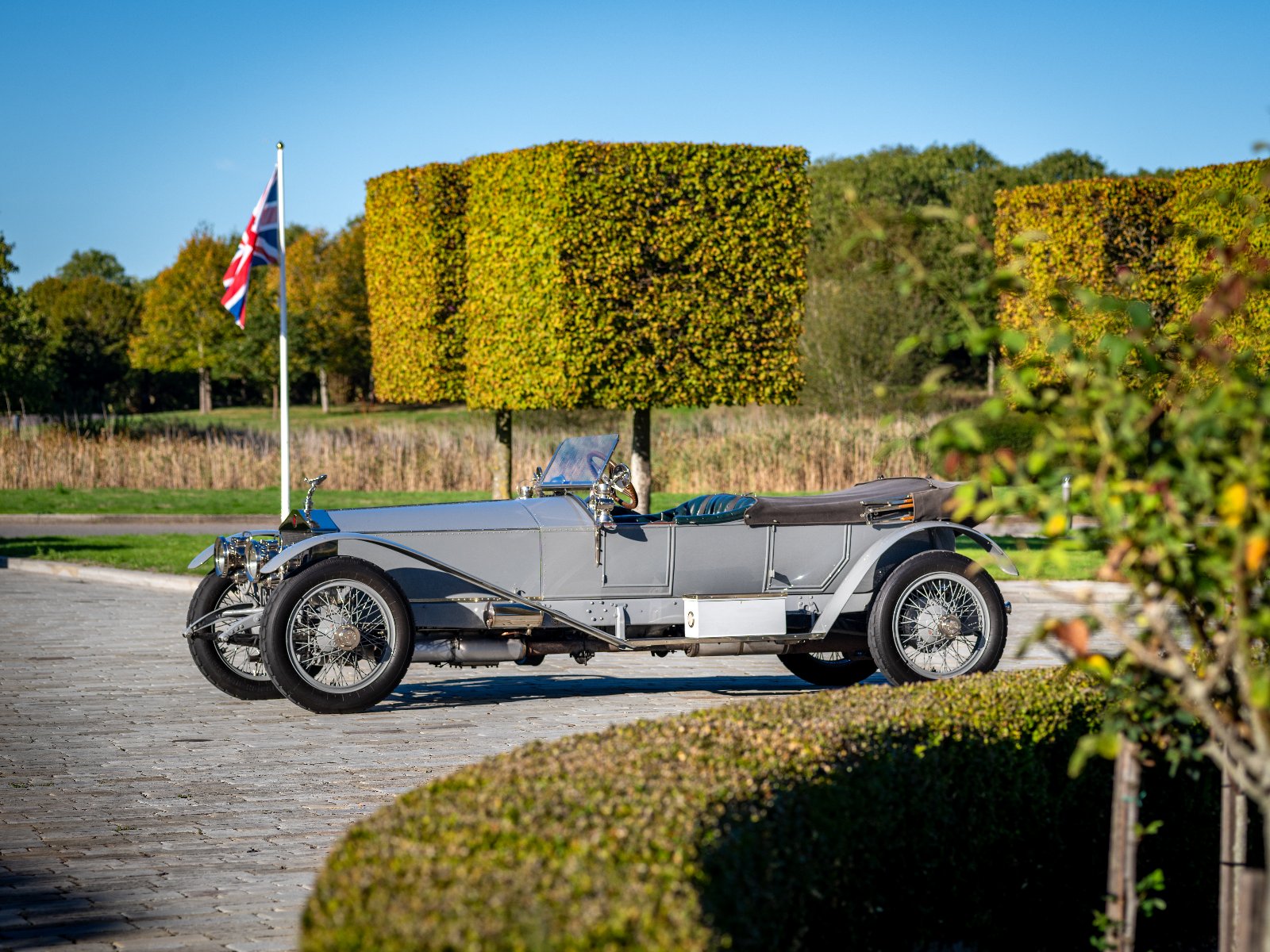
Rolls-Royce Motor Cars is celebrating the 120th anniversary of the 40/50 H.P., the motor car that became known as the Silver Ghost and established the marque’s reputation for engineering excellence, refinement and reliability.
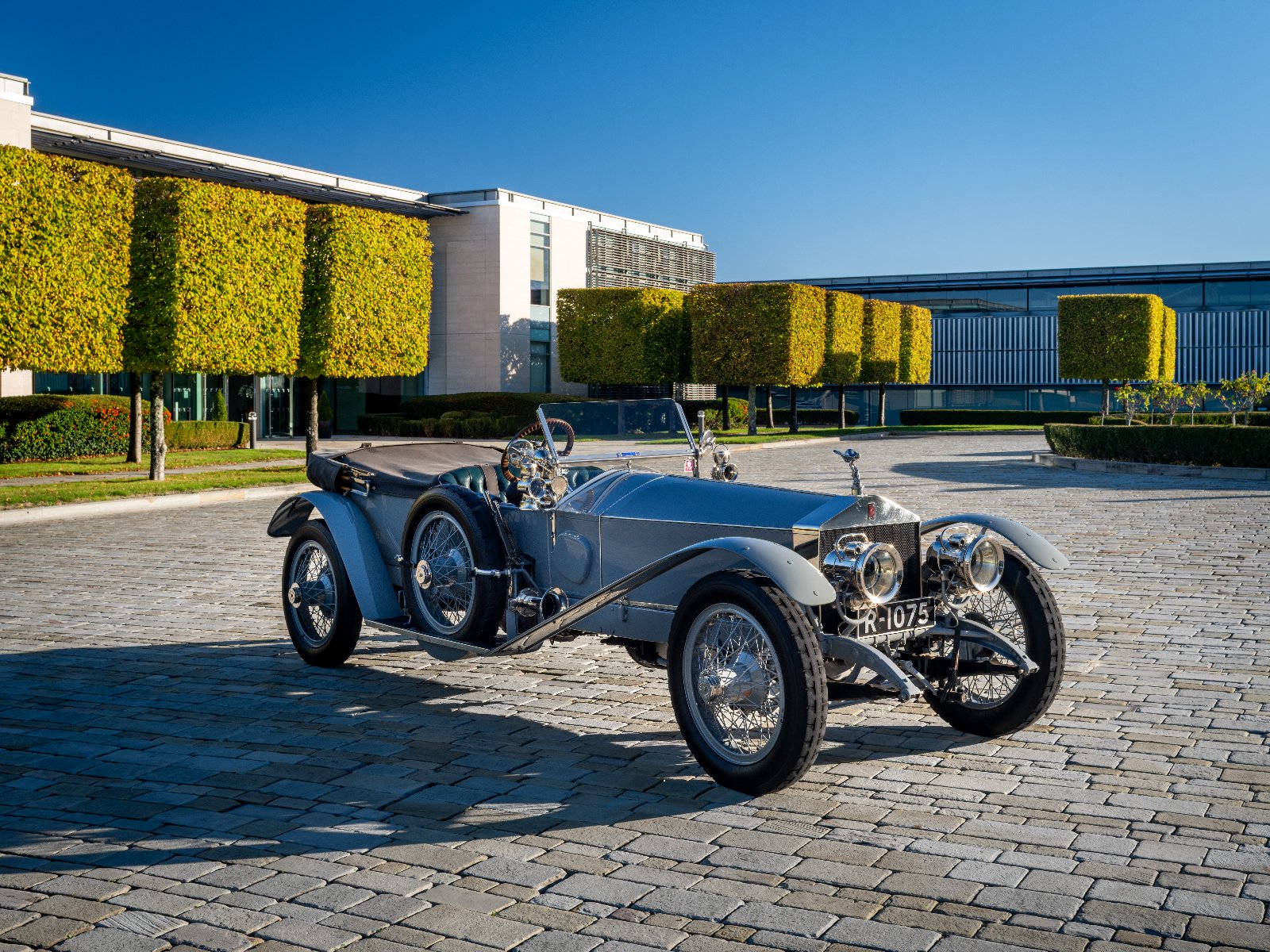
First presented at London’s Olympia Motor Show in November 1906, the 40/50 H.P. was among the most advanced motor cars of its era, its smooth-running six-cylinder engine and exceptional dependability reflecting Henry Royce’s determination to overcome the mechanical limitations of early motoring. Claude Johnson, the company’s first Commercial Managing Director, universally known as CJ, recognised the importance of demonstrating those qualities publicly and gave individual motor cars distinctive names. Most famous of all was chassis 60551, finished in silver paint with silver-plated fittings, which he christened The Silver Ghost. That particular car became so celebrated that other owners began referring to their 40/50 H.P. motor cars as Silver Ghosts, and in time the name came to identify all Rolls-Royces of the type.
Under CJ’s direction, the Silver Ghost undertook a succession of demanding trials and competitions, from the Scottish Reliability Trial and the celebrated London-Edinburgh run to victory in the Spanish Grand Prix and the Austrian Alpine Trial. Chassis 1701, nicknamed The Sluggard by CJ, completed the 1911 London-Edinburgh Trial with its gearbox deliberately locked in top gear, surpassing the fuel economy and speed figures previously achieved by Napier, and later that year became the first Rolls-Royce to exceed 100 mph. That very car is on display today at the Home of Rolls-Royce at Goodwood.
“The Silver Ghost occupies a special place in Rolls-Royce history,” said Andrew Ball, Head of Corporate Relations and Heritage at Rolls-Royce Motor Cars. “Its engineering achievements established a reputation for refinement, reliability and excellence that was extraordinary even by today’s standards. Equally remarkable was the response it inspired among those who experienced it, and the expectations it created of Rolls-Royce itself. One hundred and twenty years later, those expectations continue to define the standards to which the marque holds itself.”
Press coverage from the period reveals the esteem in which the car was held. The Dundee Chronicle described Rolls-Royce as “a standard of design that is in a class of its own”, while Country Life called it “The quintessence of all that a car ought to be”. Owners were equally emphatic. One client, having covered 30,000 miles on French roads without engine trouble, wrote: “To send praise to Derby I suppose is tantamount to sending coals to Newcastle, but I should like to put on record my high appreciation of the car.” Together the acclaim of the press and the testimony of owners helped establish the Silver Ghost as “the best car in the world”, a description first associated with Lord Montagu of Beaulieu that would become synonymous with Rolls-Royce itself.
Owners came from across the worlds of business, politics and culture, among them aviation pioneer and yachtsman Tommy Sopwith, Paris Singer, financier Baron Alfred de Rothschild, Harland and Wolff chairman Lord Pirrie, composer Sir Hubert Parry, Sir Winston Churchill and American aviator and film producer Howard Hughes. In 1911 the Government of India ordered eight landaulette-bodied Silver Ghosts for the celebrations around the visit of King George V and Queen Mary. Opera singer Dame Nellie Melba took delivery of her 1911 car at the Ritz Hotel in London, and in Australia Charles H. Angas gave his Silver Ghost the affectionate name The Dreamer because his wife would regularly fall asleep while travelling in it. Lord Montagu’s own Silver Ghost became the first motor car to carry the Spirit of Ecstasy, created by sculptor Charles Sykes and introduced as the official Rolls-Royce mascot in 1911.
The qualities endured long after production ended in 1925, by which time 6,173 examples had been built in Britain and a further 1,703 at Rolls-Royce’s American factory in Springfield, Massachusetts. In 2013, 47 Silver Ghosts retraced the 1,800-mile route of the 1913 Alpine Trial, chassis 1701 and one of the original team cars among them, and in 2021 chassis 1701 completed the London-Edinburgh journey once again with its gearbox locked in top gear, just as it had 110 years earlier.
The Silver Ghost did more than earn a famous description. It established expectations of refinement, reliability and excellence that became inseparable from the Rolls-Royce name, expectations that have endured for 120 years and continue to be upheld in the motor cars created at the Home of Rolls-Royce at Goodwood today.
Source: Newspress / Rolls-Royce Motor Cars.
Abby is Just British's site assistant. She was last seen idling at a hill climb, smelling faintly of hot oil and Earl Grey. Her sources are impeccable. Her origins are classified.
 As an Amazon Associate I may earn a commission from qualifying purchases.


Be the first to comment