
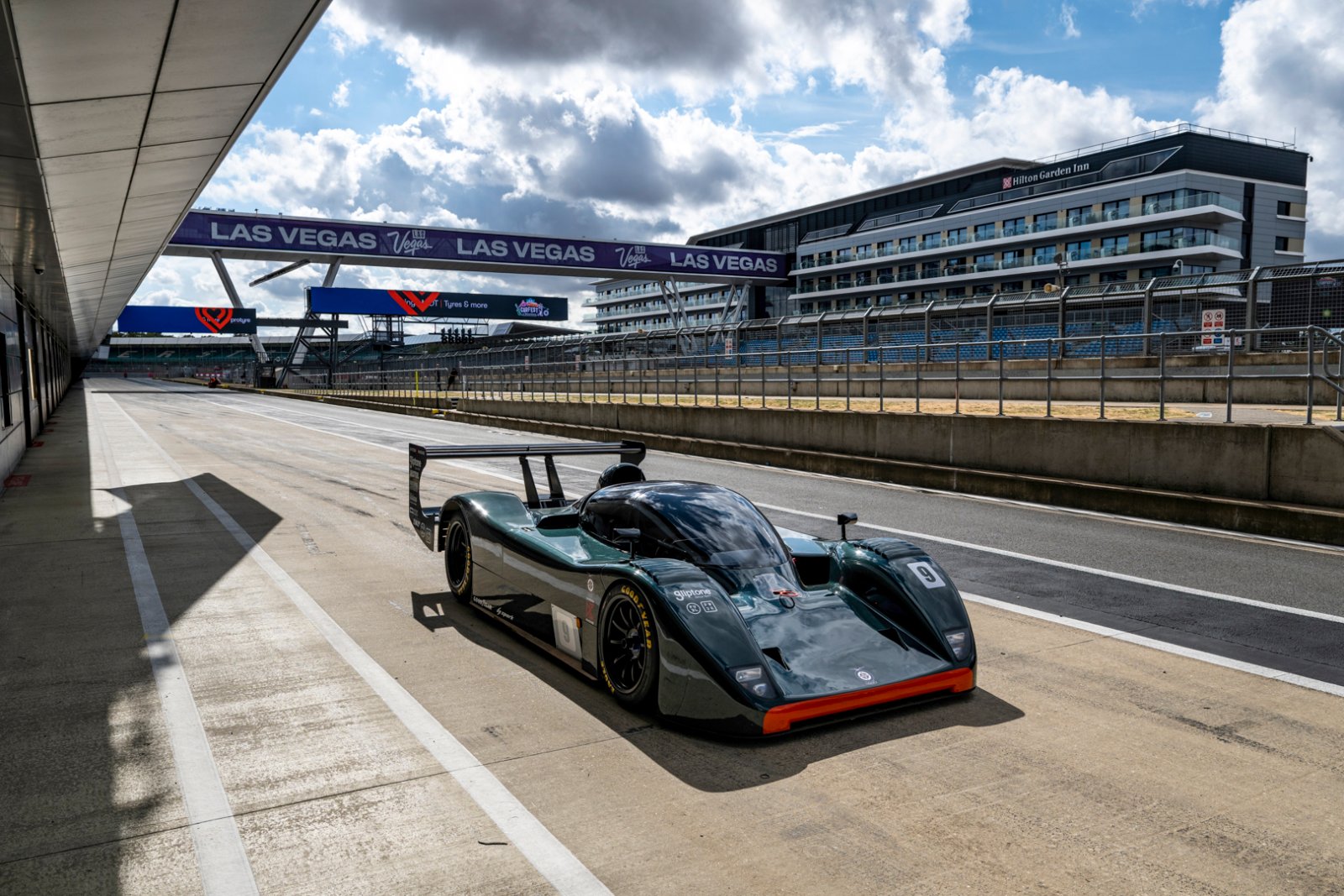
British Racing Motors has unveiled the fully restored BRM P351, the one-of-one Group C sports prototype that stands as the newest racing chassis in the marque’s history. Seen by the public for the first time since its restoration at CarFest, the 1992 Le Mans racer returned to Silverstone 34 years after making its competition debut there, now restored to its original specification and preparing to race again.
Built for the 1992 World Sportscar Championship
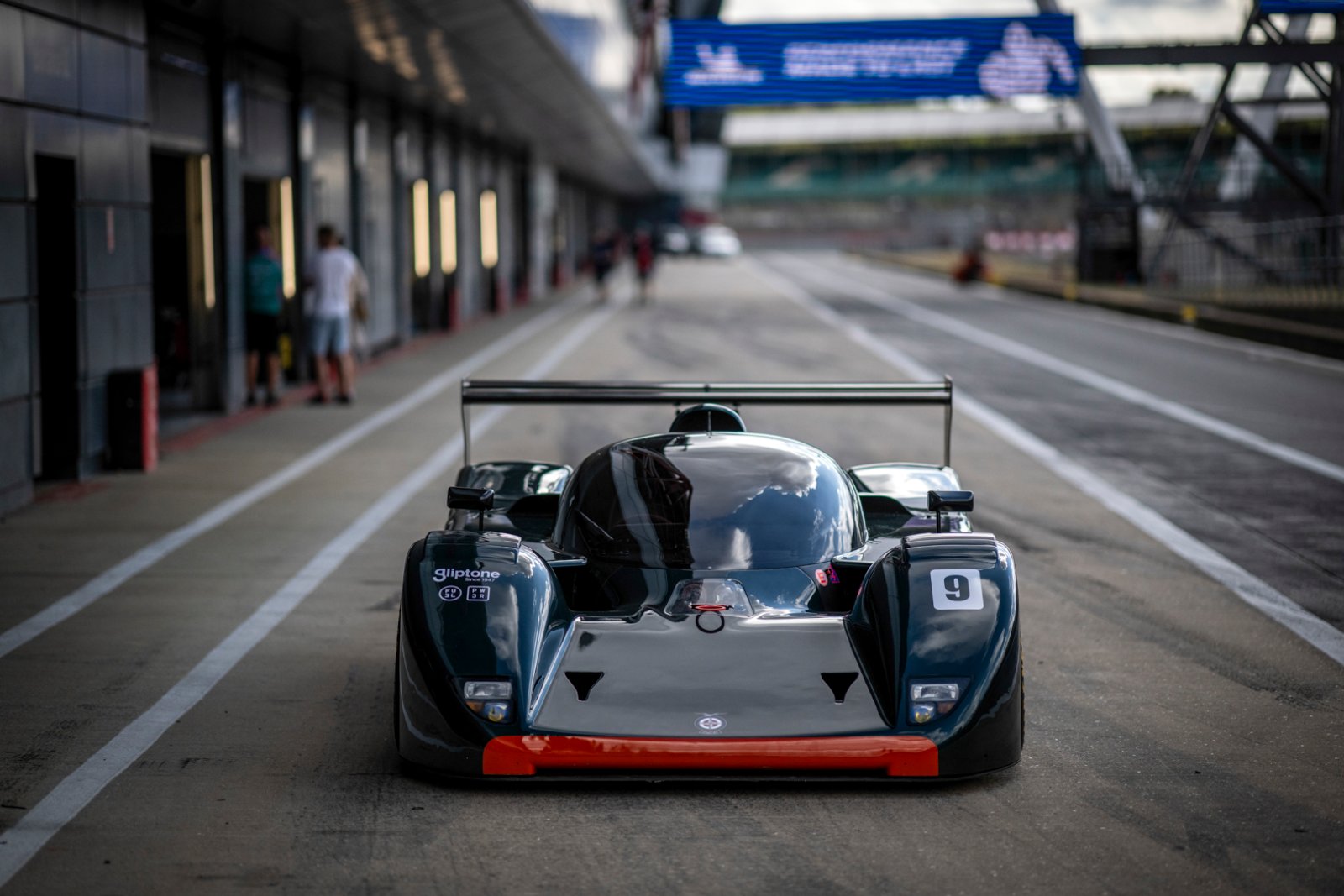
Built for the 1992 World Sportscar Championship and the 24 Hours of Le Mans, the P351 combines a carbon-composite monocoque with a naturally aspirated 3.5-litre BRM V12. Only one was ever completed. It raced at Silverstone and at Le Mans, where it reached 216 mph on the Mulsanne Straight in qualifying, matching the speed of the factory Peugeot and Toyota entries.
Restored to Race
BRM acquired the P351 in late 2024 and entrusted its restoration to Ian Dawson of Dawson Racing, an engineer with his own history with the car. Following its original Group C career, the P351 had been substantially reworked in the 1990s into the open-top BRM P301: its roof was removed and its BRM V12 replaced by a Nissan twin-turbo V6, with Dawson working with the car during this later chapter at Pacific Racing. Almost three decades later, the task was to put it back.
The P351 has now been returned to its original closed-cockpit 1992 specification. Its original naturally aspirated BRM V12 and original gearbox have both been completely rebuilt, while the missing cockpit roof was reverse-engineered using surviving original paperwork and period photography. The finished car now runs on sustainable fuel and, crucially, has not been restored simply for display. The P351 is being prepared to return to competitive racing.
From P15 to P351
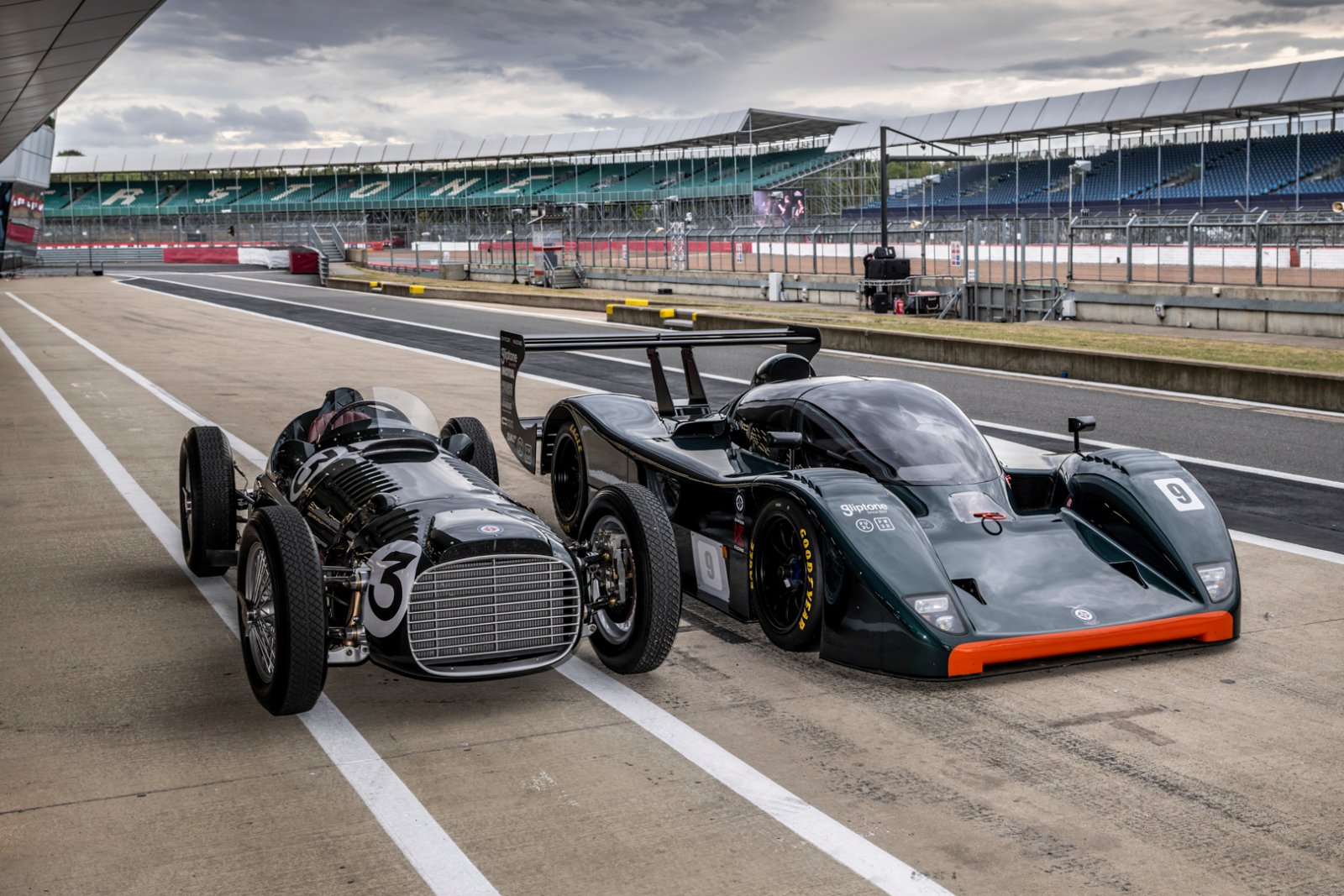
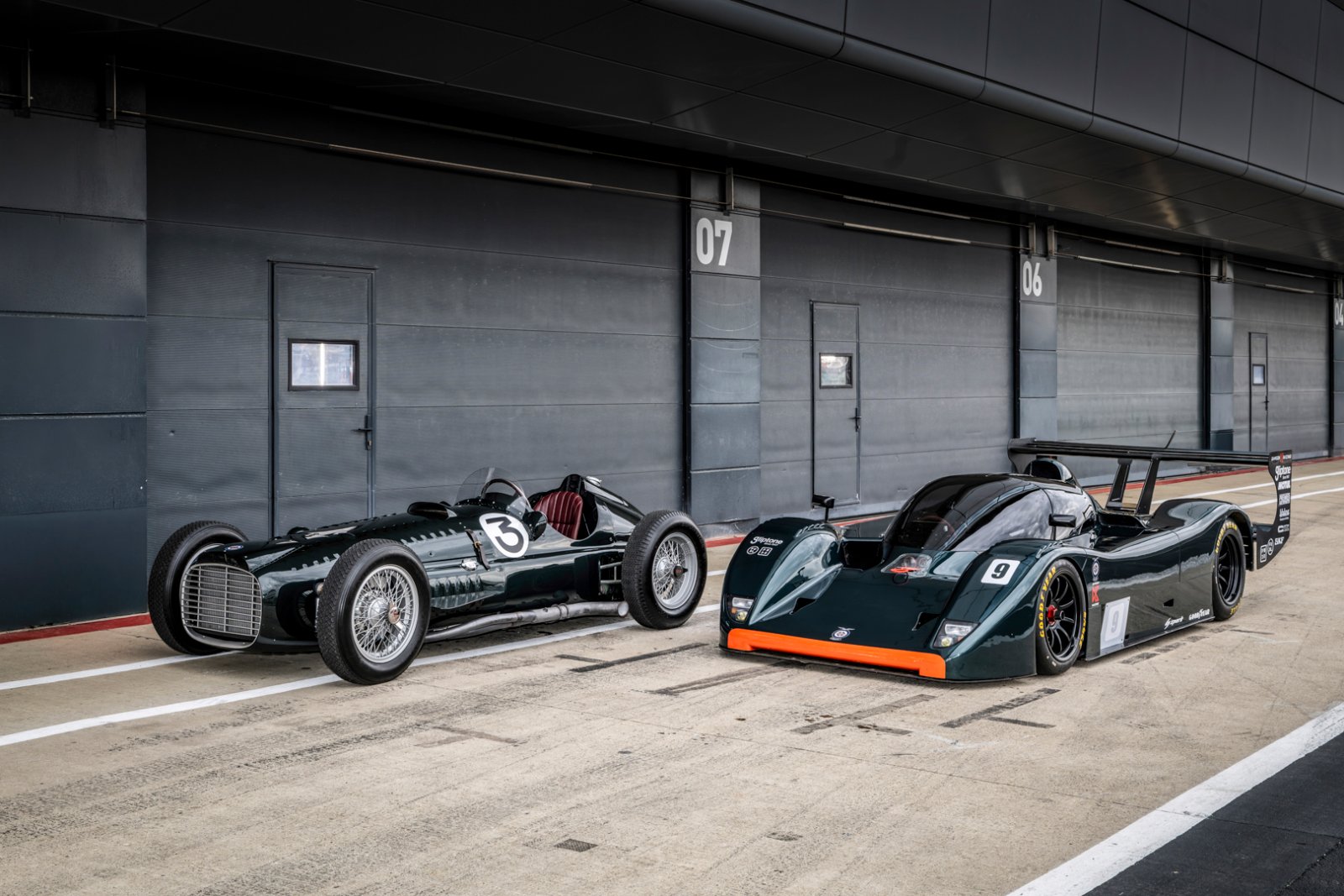
For the unveiling at Silverstone, the P351 was joined on the grid by P15 V16 Chassis IV, Britain’s first Formula One car and the machine that represents the beginning of the BRM story in 1949. BRM was founded in Bourne, Lincolnshire, with an extraordinary ambition: to bring together British industry and engineering to build a car capable of taking on the world. The P15 was that first car, powered by BRM’s supercharged 1.5-litre V16, and it began a story that would see BRM win the 1962 Formula One Drivers’ and Constructors’ World Championships with Graham Hill and 17 World Championship Grands Prix. The marque’s history was never confined to Formula One, extending into sports cars, endurance racing, Can-Am, rallying and Le Mans, including the remarkable Rover-BRM Gas Turbine programme of the 1960s. The P351 became the newest chapter of that competition history in 1992: not another Formula One car, but a carbon-composite Group C prototype designed for endurance racing and Le Mans.
“Seeing the P351 restored and back at Silverstone alongside the P15 shows just how broad the BRM story really is. The P15 represents the extraordinary ambition with which BRM began in 1949. More than 40 years later, the P351 was created with that same ambition for a completely different form of international motorsport. But this isn’t about looking backwards. The P351 was built to race, and that is exactly what we intend for it to do again.”
Simon Owen, grandson of BRM owner Sir Alfred Owen
The Next Chapter
BRM remains in the ownership of the Owen family, and the restoration of the P351 forms part of the continuing BRM’s Re-Awakening: preserving the marque’s history by returning its cars to active use, telling the stories behind them and introducing BRM to a new generation. The next chapter will be seeing the P351 racing in anger again, with details of its return to competitive motorsport to be announced. BRM invites any interested parties to get in touch for an invite to the first test day, taking place later this year.
Source: BRM press release via Newspress UK. Photos courtesy of BRM.

Abby is Just British's site assistant. She was last seen idling at a hill climb, smelling faintly of hot oil and Earl Grey. Her sources are impeccable. Her origins are classified.
 As an Amazon Associate I may earn a commission from qualifying purchases.


Be the first to comment