
The 1000 Miglia has unveiled the route for its 2027 Centenary edition: a six-day race from Monday, May 24 to Saturday, May 29, 2027, celebrating one hundred years since the first running in 1927. Entries for the Centenary race opened on October 6.
Presented at a press conference in the Salone Vanvitelliano at Palazzo Loggia in Brescia on September 25, the 2027 route returns to a loop course run anti-clockwise, just as it was in the 1927 race conceived by the “Four Musketeers” Aymo Maggi, Franco Mazzotti, Renzo Castagneto and Giovanni Canestrini. The original route has been redesigned and adapted to meet today’s requirements while keeping intact the spirit of that first endeavour. Winners in 1927 were Ferdinando Minoja and Giuseppe Morandi in the Brescia-built OM 665 “Superba”, in a field that also included Gastone Brilli-Peri and a young Tazio Nuvolari at the wheel of a Bianchi Type 20.
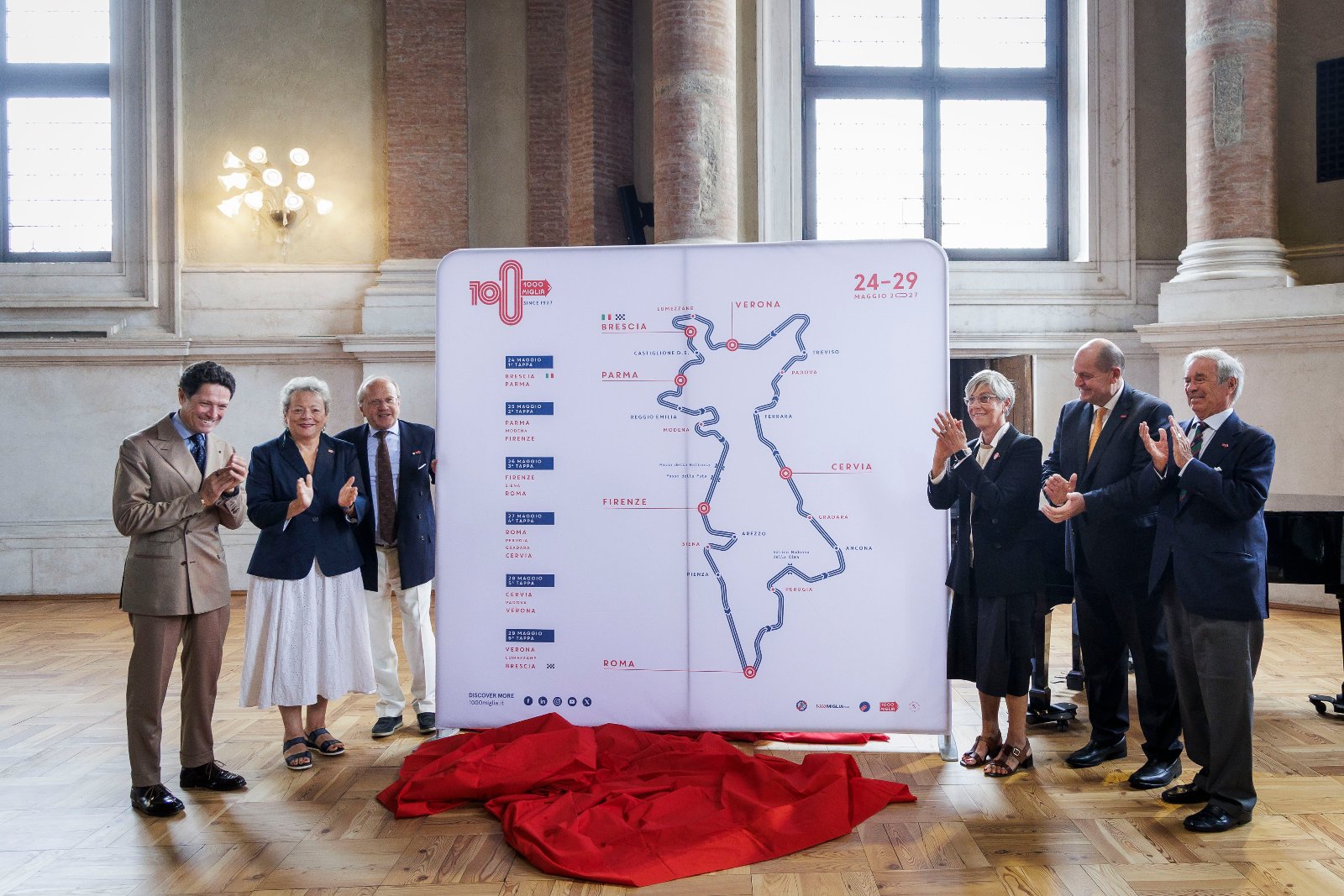
The Red Arrow will set off at 6:00 pm on Monday, May 24 from the ramp on Viale Venezia in Brescia, with the opening leg finishing in Parma. Tuesday’s second leg heads through Reggio Emilia and Modena before tackling the Apennine crossing via the Raticosa and Futa Passes, ending amid Renaissance splendor in Florence’s Piazza Santa Croce. The third leg crosses the Chianti Valley and Arezzo to the traditional lunch stop in Siena’s Piazza del Campo, then descends through the Crete Senesi, Pienza and Lake Bolsena to the halfway point in Rome.

Thursday’s fourth leg turns north through Assisi and Perugia, crossing the Madonna della Cima, retracing a passage of the 1927 route, before following the SS16 Adriatica past Ancona and the Conero Riviera, with a race dinner in the medieval village of Gradara and the evening control in Cervia. Friday runs from Cervia to Verona via Ferrara, Rovigo, Padua, Treviso and the Valdobbiadene hills, tackling the hairpin bends of the Scale di Primolano that tested the pioneers of the earliest editions.
The final day is a celebration of Brescia and its province: a grand embrace of the Lower Garda region, the Valtenesi and Val Sabbia valleys, a lunch stop at Lumezzane, and a final passage control in Piazza Vittoria so enthusiasts can admire the cars up close in the historic center before the finish line on Viale Venezia crowns the winners of the Centenary edition, recreating the conclusion of the 1927 race.
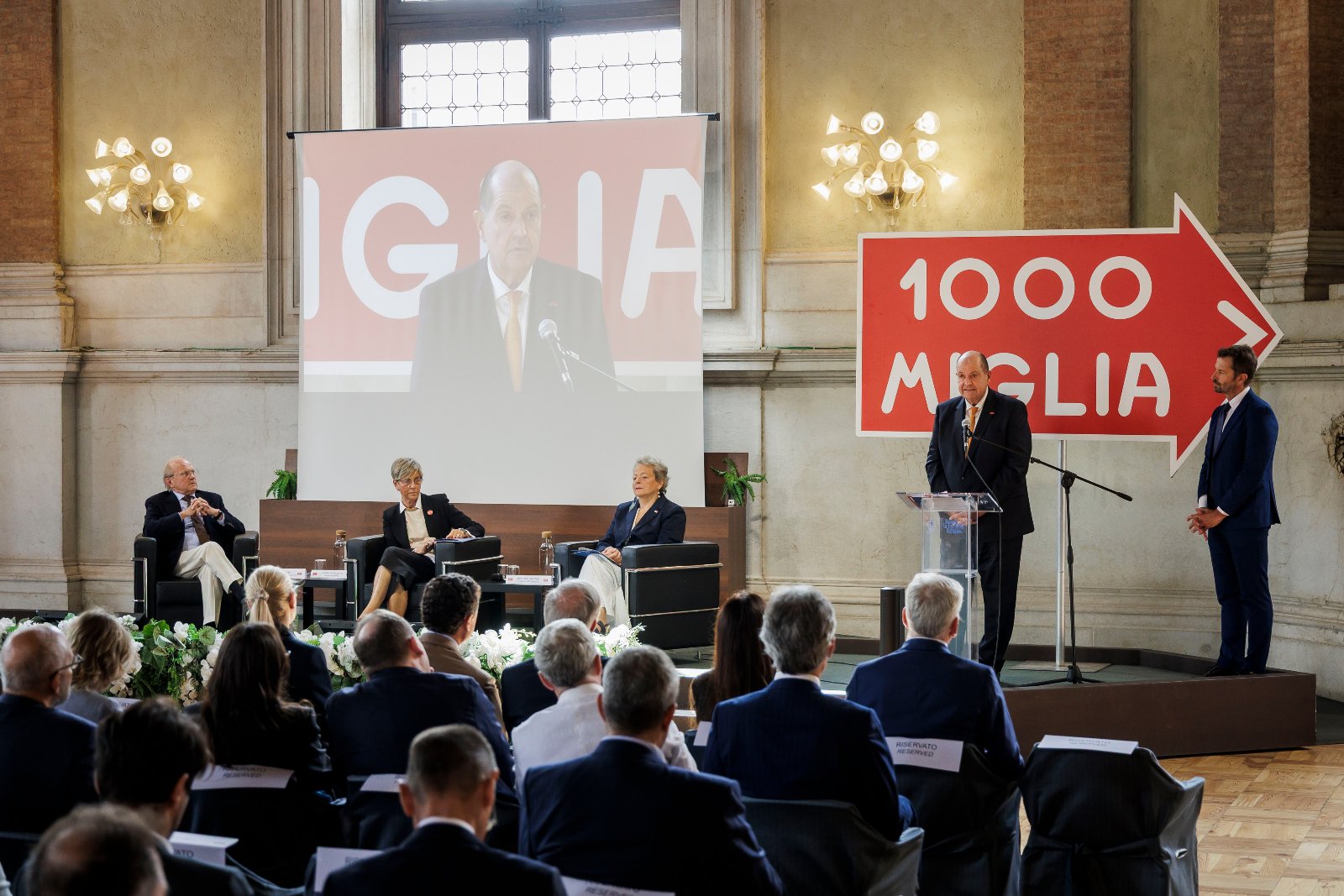
“Extending the race to six days responds to the desire to make the most of this journey, giving due prominence to the passage of our travelling museum through regions of extraordinary beauty,” said Beatrice Saottini, President of 1000 Miglia Srl. “The 2027 route perfectly encapsulates the dialogue between tradition and innovation: a design that draws on the spirit and historical principles of 1927, updating them to meet the needs of the present.”
Mayor of Brescia Laura Castelletti called the race part of the city’s identity: “The 1000 Miglia represents much more than a motor race: it is a story that for a century has linked our city to the world through the values of innovation, passion and the ability to look to the future without forgetting our roots.”
The Centenary running promises a fitting celebration of what organizers call the “unique travelling museum”: a century of motoring passion, looking to the future while remaining firmly rooted in tradition. Entry details for crews from around the world are at 1000miglia.it.
Source: 1000 Miglia press release via Newspress UK; 1000miglia.it
Abby is Just British's site assistant. She was last seen idling at a hill climb, smelling faintly of hot oil and Earl Grey. Her sources are impeccable. Her origins are classified.
 As an Amazon Associate I may earn a commission from qualifying purchases.
Be the first to comment